

 Image 1 of 1
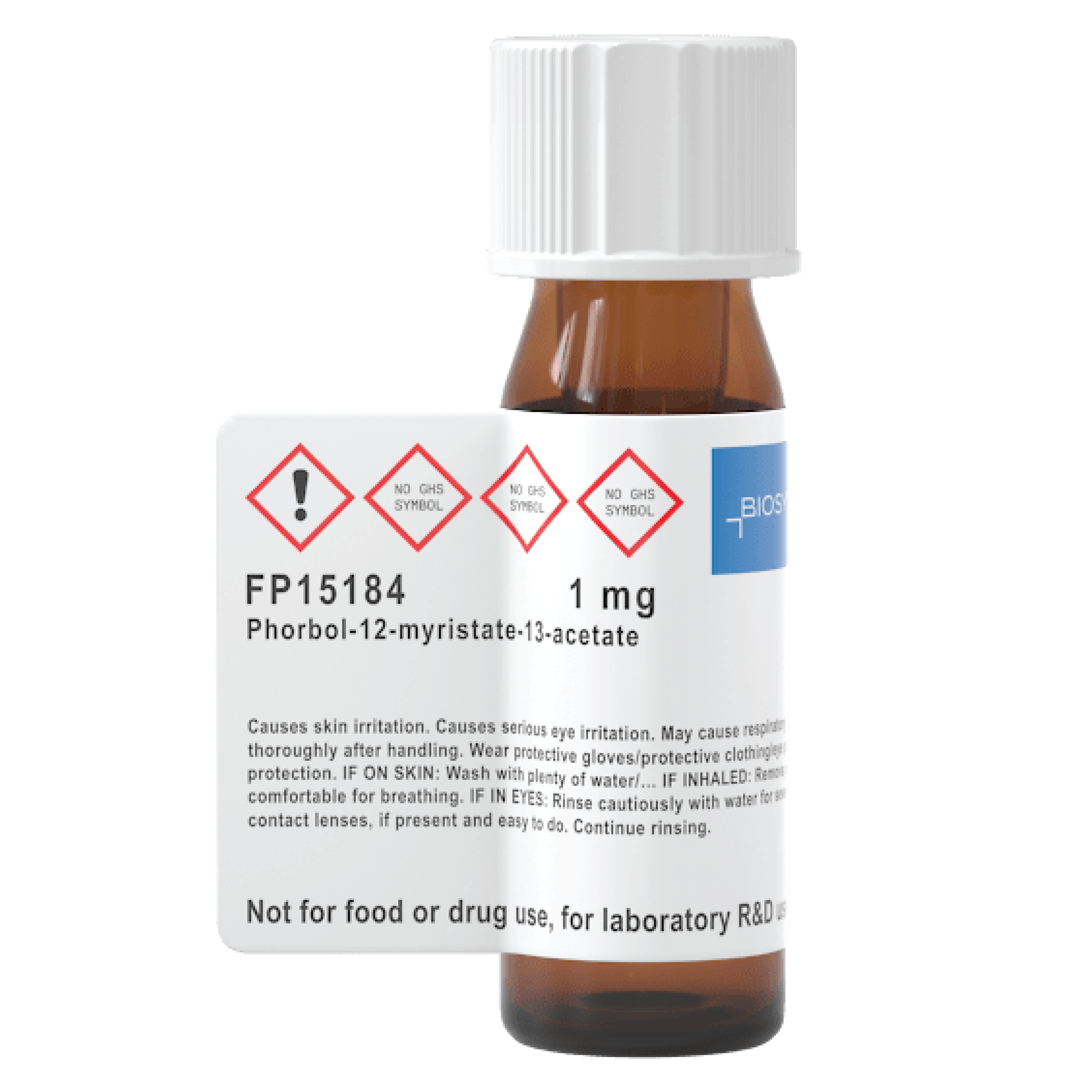
Phorbol 12-myristate 13-acetate, 98% (HPLC), solid, PKC activator, Calbiochem
Product Name: Phorbol 12-Myristate 13-Acetate (PMA) – A potent activator of protein kinase C (PKC) widely used in cell signaling and biomedical research.
Synonyms: PMA, TPA (12-O-Tetradecanoylphorbol-13-acetate), Phorbol Ester, PKC Activator.
Scientific Composition: Organic phorbol ester compound derived from tigliane diterpenes.
Scientific Formula: C₃₆H₅₆O₈
CAS Number: 16561-29-8
Physical Description: White to off-white crystalline powder, typically dissolved in solvents like DMSO for laboratory use.
Applications: Used in cell biology, immunology, cancer research, and signal transduction studies to activate PKC, induce cell differentiation, and stimulate cellular responses.
Storage Conditions: Store at -20°C, protected from light and moisture; prepare aliquots to avoid repeated freeze-thaw cycles.
Key Features: Highly potent PKC activator, widely used research reagent, reliable biological activity, and suitable for in vitro experimental applications.
Phorbol 12-myristate 13-acetate, 98% (HPLC), solid, PKC activator, Calbiochem
Product Name: Phorbol 12-Myristate 13-Acetate (PMA) – A potent activator of protein kinase C (PKC) widely used in cell signaling and biomedical research.
Synonyms: PMA, TPA (12-O-Tetradecanoylphorbol-13-acetate), Phorbol Ester, PKC Activator.
Scientific Composition: Organic phorbol ester compound derived from tigliane diterpenes.
Scientific Formula: C₃₆H₅₆O₈
CAS Number: 16561-29-8
Physical Description: White to off-white crystalline powder, typically dissolved in solvents like DMSO for laboratory use.
Applications: Used in cell biology, immunology, cancer research, and signal transduction studies to activate PKC, induce cell differentiation, and stimulate cellular responses.
Storage Conditions: Store at -20°C, protected from light and moisture; prepare aliquots to avoid repeated freeze-thaw cycles.
Key Features: Highly potent PKC activator, widely used research reagent, reliable biological activity, and suitable for in vitro experimental applications.