

 Image 1 of 1
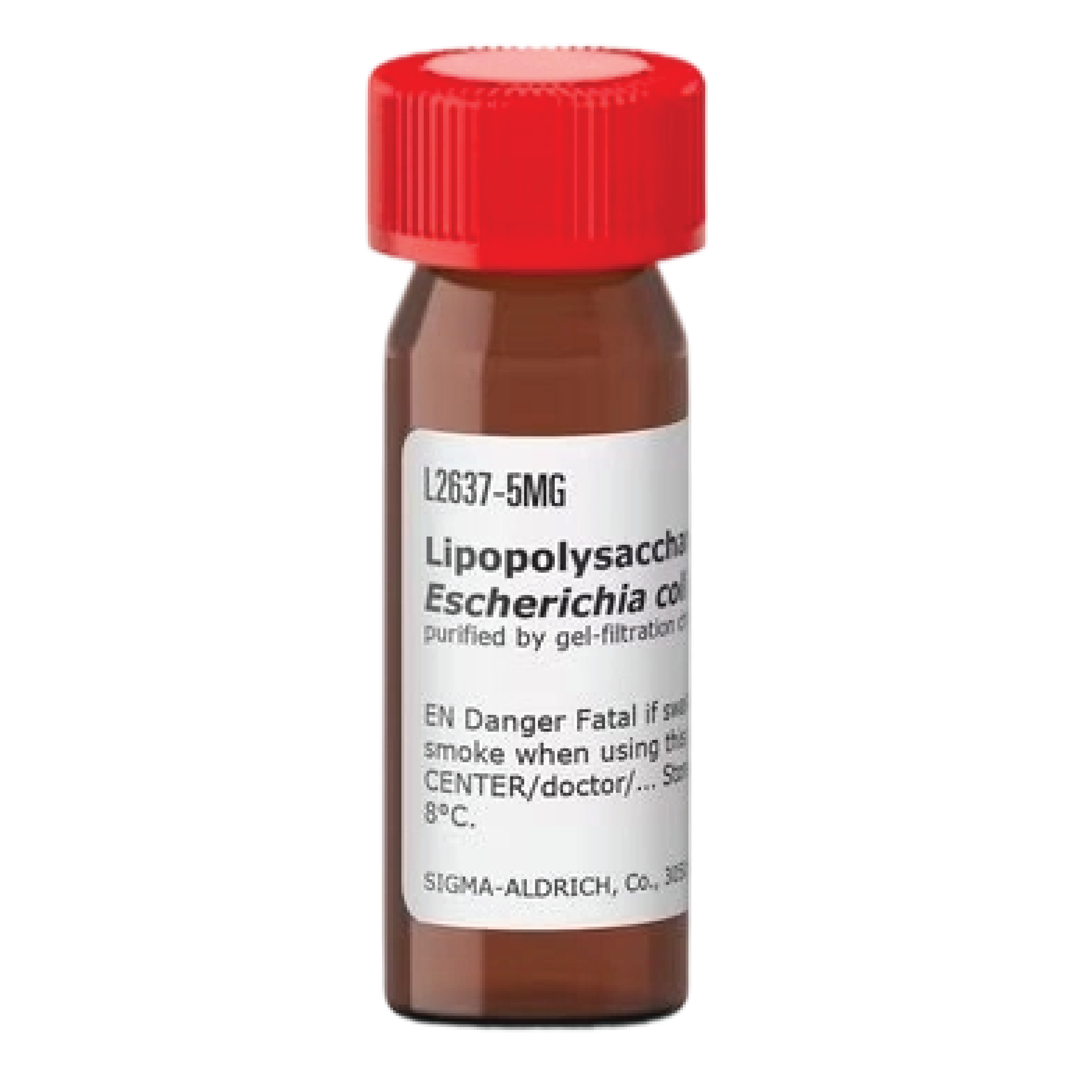
Lipopolysaccharides from Escherichia coli O55:B5
purified by gel-filtration chromatography
Product Name: Lipopolysaccharides from Escherichia coli O55:B5 – A purified endotoxin preparation used to stimulate immune responses in research applications.
Synonyms: LPS E. coli O55:B5, Endotoxin LPS, Bacterial Lipopolysaccharide, Immune Stimulant LPS, LPS Reagent.
Scientific Source: Derived from Escherichia coli serotype O55:B5.
Scientific Composition: Complex molecule consisting of lipid A, core oligosaccharide, and O-antigen polysaccharide chains.
Scientific Formula: Not applicable (heterogeneous macromolecular complex).
CAS Number: 93572-42-0 (Lipopolysaccharides from E. coli).
Physical Description: White to off-white lyophilized powder, soluble in aqueous buffers for experimental use.
Applications: Used in immunology, cell biology, inflammation research, cytokine induction studies, and drug development to activate immune cells (e.g., macrophages).
Storage Conditions: Store at 2–8°C (short-term) or -20°C (long-term); protect from moisture and repeated freeze-thaw cycles.
Key Features: High biological activity, consistent endotoxin profile, reliable immune stimulation, and suitable for in vitro and in vivo research.
Lipopolysaccharides from Escherichia coli O55:B5
purified by gel-filtration chromatography
Product Name: Lipopolysaccharides from Escherichia coli O55:B5 – A purified endotoxin preparation used to stimulate immune responses in research applications.
Synonyms: LPS E. coli O55:B5, Endotoxin LPS, Bacterial Lipopolysaccharide, Immune Stimulant LPS, LPS Reagent.
Scientific Source: Derived from Escherichia coli serotype O55:B5.
Scientific Composition: Complex molecule consisting of lipid A, core oligosaccharide, and O-antigen polysaccharide chains.
Scientific Formula: Not applicable (heterogeneous macromolecular complex).
CAS Number: 93572-42-0 (Lipopolysaccharides from E. coli).
Physical Description: White to off-white lyophilized powder, soluble in aqueous buffers for experimental use.
Applications: Used in immunology, cell biology, inflammation research, cytokine induction studies, and drug development to activate immune cells (e.g., macrophages).
Storage Conditions: Store at 2–8°C (short-term) or -20°C (long-term); protect from moisture and repeated freeze-thaw cycles.
Key Features: High biological activity, consistent endotoxin profile, reliable immune stimulation, and suitable for in vitro and in vivo research.